
Steel Drums to Soca: A Listener’s Guide to Caribbean Music Traditions
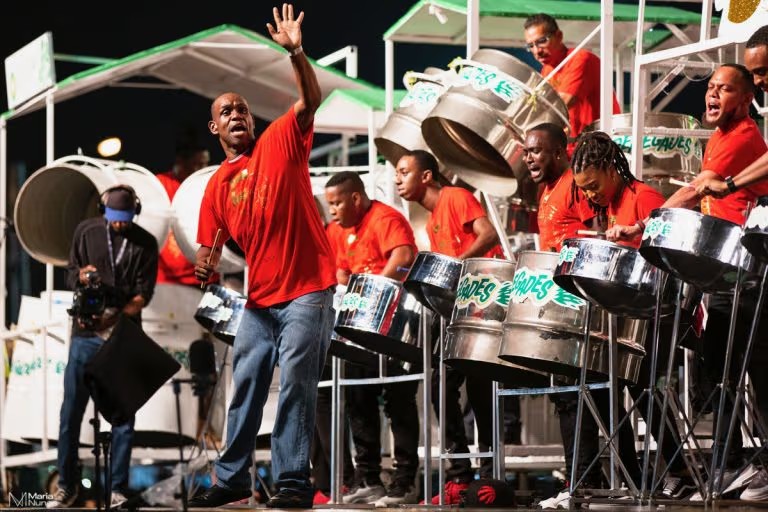
Caribbean music is not a single thing. The region spans dozens of islands with distinct colonial histories, African and Indigenous roots, and overlapping cultural influences that produced a remarkable variety of musical traditions — some closely related, some entirely their own. Understanding what you’re hearing, where it comes from, and what distinguishes one tradition from another deepens the experience of the music considerably and changes what a visit to any Caribbean port sounds like.
Steel Pan: The Instrument the Caribbean Gave the World
The steel pan — commonly called a steel drum, though it isn’t played with sticks like a drum — is the only acoustic instrument invented in the twentieth century. It originated in Trinidad in the 1930s and 1940s, developed by Afro-Trinidadian musicians who discovered that the discarded oil drums left behind by industrial operations could be tuned by hammering the metal into concave sections, each producing a distinct pitch.
What began as street music associated with Carnival became one of the most technically sophisticated instruments in the world. A full steel pan orchestra — called a steel band — can play everything from calypso to classical repertoire, and the best players demonstrate a precision and expressiveness that surprises audiences who associate the instrument with resort background music.
Hearing steel pan in its proper context — at a Carnival event in Trinidad, at a pan yard rehearsal, or at a live performance by a serious ensemble — is a different experience from the same instrument played for tourists. Both are worth seeking out, but they aren’t the same thing.
Calypso and Its Descendants
Calypso developed in Trinidad alongside steel pan and shares its roots in Carnival culture and African musical traditions. Historically, calypso was as much social commentary as entertainment — a vehicle for wit, political satire, and community storytelling at a time when direct criticism of power was dangerous. The calypso tent, where singers competed for recognition, was one of the Caribbean’s great traditions of public speech.
Soca — soul calypso — emerged in Trinidad in the 1970s as calypso evolved toward a harder, more rhythmically driving sound suited to dancing. Contemporary soca is the dominant music of Carnival across the English-speaking Caribbean and has spread far beyond its Trinidadian origins. Artists including Machel Montano, Bunji Garlin, and Kes the Band are worth knowing for anyone who wants to understand what’s currently moving the genre.
On a Caribbean cruise with stops in Trinidad, Barbados, or Grenada, soca is the soundtrack of any street party or Carnival-related event. It’s not background music — it’s designed to compel physical response, and resisting it requires more effort than most people want to spend.
Reggae and the Jamaican Sound
Reggae needs less introduction than most Caribbean musical traditions because of its global reach, but its roots and the full breadth of the tradition are often underappreciated outside Jamaica. Reggae emerged in the late 1960s from ska and rocksteady — earlier Jamaican genres that drew on American R&B alongside Caribbean rhythms — and became one of the most influential popular music forms of the twentieth century.
The offbeat guitar strum, the prominent bass, and the tempo that is deliberately slower than the dance rhythms it descended from are defining characteristics. Bob Marley brought reggae to international attention in the 1970s, but the genre encompasses a much wider range of artists and styles than his work alone suggests. Burning Spear, Toots and the Maytals, Culture, and Junior Murvin represent different facets of the classic period. Dancehall — the faster, harder, more electronic descendant of reggae that has dominated Jamaican popular music since the 1980s — is its own substantial tradition.
Merengue and Bachata from Hispaniola
The Dominican Republic and Haiti share the island of Hispaniola and have produced two of the Caribbean’s most internationally recognized dance music traditions.
Merengue — fast, syncopated, built around the güira scraper and tambora drum — is the national music of the Dominican Republic and one of the most immediately danceable forms in the Caribbean. The basic step is technically accessible even for beginners, which has contributed to its global spread through Latin dance communities.
Bachata originated in the rural Dominican Republic and was long stigmatized as music of the poor before crossing over internationally in the 1980s and 1990s. Its guitar-driven sound, slower tempo, and emotional directness distinguish it clearly from merengue. Romeo Santos has brought contemporary bachata to mainstream audiences worldwide while the tradition’s older artists — Juan Luis Guerra, Anthony Santos, Luis Vargas — remain essential listening.
Finding the Music in Port
The best way to engage with Caribbean music traditions is to hear them live and in context. Asking locals where music happens — which bars host live bands, which neighborhoods have street music on weekends, which venues book serious artists — produces better results than relying on tourist-facing recommendations.
Most ports of call have a version of this if you know to look for it. The music is there. It rewards the small effort of finding where it actually lives.